July 21, 2025
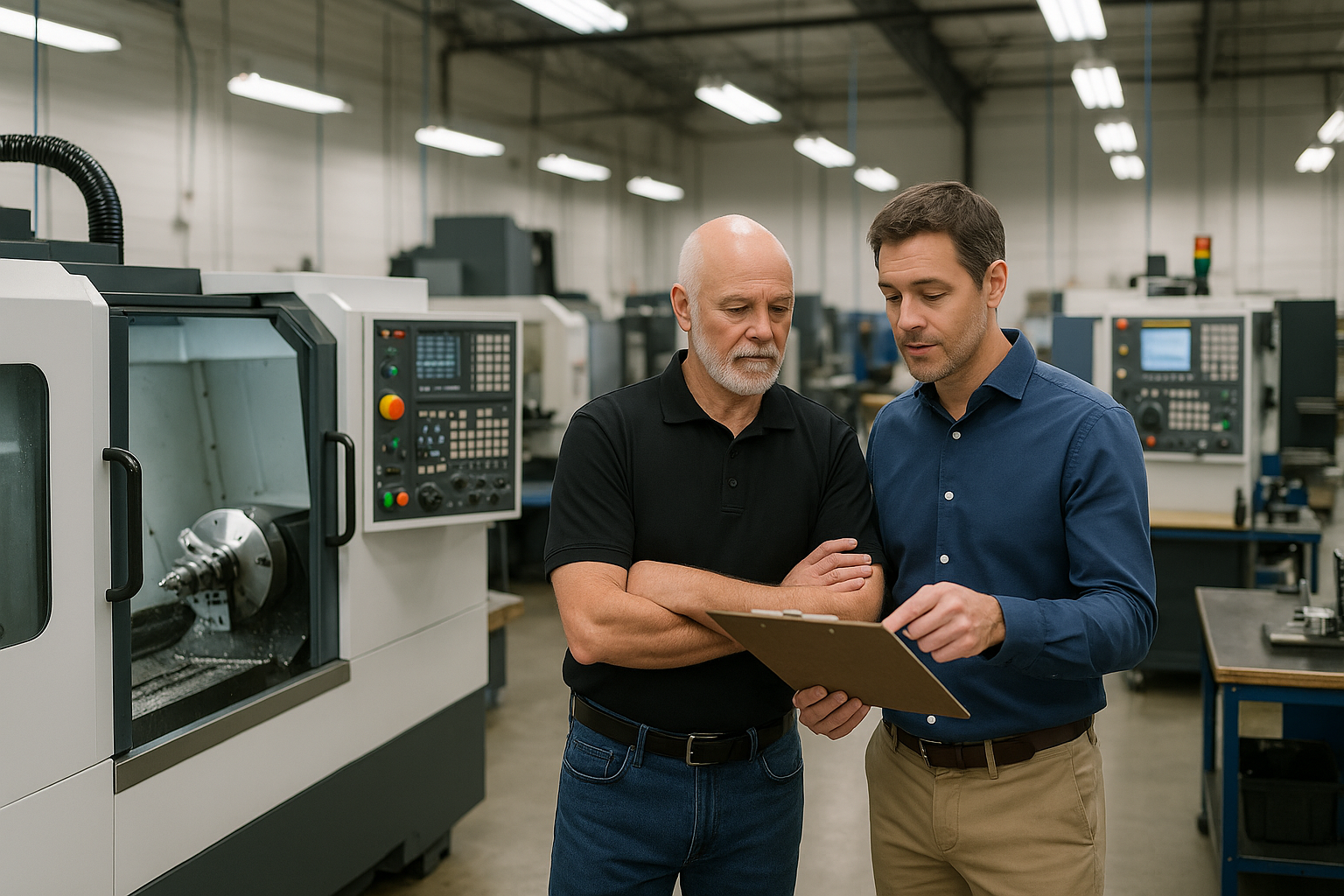
Yes, buyers are going to like the shop. No question. If you've got CNC equipment, trained people, repeat industrial customers, and work that takes real skill, that's a great starting point. Especially around Chicagoland. Elk Grove Village, Schaumburg, Aurora, Elgin, Joliet, the western suburbs... there's a LOT of buyer appetite for real manufacturing businesses here.
But no, they won't price it off revenue alone. They just won't. They want to know what keeps running after you hand over the keys. The machines? The people? The customers? The quoting? The backlog? All of it.
And that's where you can win. Because if you get this stuff organized before buyers show up, you don't just make due diligence easier. You make the business feel safer, cleaner, and more transferable. Buyers pay for that.
Customer concentration comes first
A lot of excellent machine shops have a few big customers. OEMs, distributors, industrial accounts, maintenance customers, defense subcontractors, packaging companies, food equipment manufacturers, medical component buyers, aerospace support work. That's normal.
But if one customer is 30%, 40%, or more of your annual revenue, buyers are going to stop and stare at it. Not because the business is bad. Because they need to know if that work sticks after closing.
So what should you have ready?
- Top customers by year
- Revenue for the last 3 years
- Gross margin by account
- Recurring work vs. project work
- Purchase orders and blanket agreements
- Key customer contacts
If a major customer has been with you for 10 years, say that. That's a big deal. If the customer only calls because you personally answer every RFQ at 9:30 at night, say that too. Buyers can handle the truth, they just don't like surprises.
Pro tip: a customer list with history beats a story every time. Every time.
Equipment matters, but it isn't the whole price
You know what you paid for your CNC mills, lathes, grinders, EDM equipment, inspection tools, forklifts, compressors, and tooling. You probably remember the painful checks too (every shop owner does).
Buyers look at it differently. They separate asset value from earnings value. A shop with older, well-kept machines and strong profit can be worth more than a shop with shiny newer equipment and weak cash flow. That's not theory. I've seen it happen more times than I can count.
Build a clean equipment list. Not a scribbled note. A real list.
- Make
- Model
- Year
- Serial number
- Maintenance status
- Estimated market value
- Financed or leased?
- Critical jobs tied to that machine
Buyers will also ask about controls, replacement parts, capacity, and downtime. If a machine is maxed out and could justify another shift, that's not a problem, that's opportunity. Say it clearly.
SBA-financed buyers may need equipment appraisals or a collateral review. Strategic buyers may care more about whether your equipment fills a gap in their own plant. Either way, clean records help them move faster.
Backlog tells buyers what happens next month
Buyers don't want to feel like the business starts from zero every Monday morning. They want to see backlog, open purchase orders, repeat jobs, active quotes, and ordering patterns.
Even a job shop with variable work can show a solid rhythm. Repeat part numbers. Quote win rates. Customers who come back every quarter. Jobs tied to maintenance cycles. That's good stuff, don't hide it in your head.
Job costing is where a lot of shops get sloppy. And sloppy costs money.
If you don't know which jobs make money, buyers will discount the offer. Not because they're mean. Because uncertainty gets priced in. So pull together labor hours, machine time, outside processing, materials, scrap, rework, and expedite costs.
- Strong signal: margin by job, customer, or product family.
- Weak signal: pricing from gut feel with no backup.
- Easy fix: a basic report with quote history, backlog, and completed job profit.
Is it perfect? Maybe not. It doesn't have to be perfect. It has to be clear enough that a buyer can see how the shop makes money.
Your people may be worth more than the machines
Good machinists are hard to find. Good programmers, quality inspectors, estimators, and shop supervisors? Even harder. In Illinois manufacturing, skilled employees are a huge value driver.
Buyers will ask one big question: can this place run without you?
If you're still programming the hardest jobs, talking to every customer, fixing every production issue, approving every quote, and remembering every old setup from 2008, that's not fatal. But it needs a plan.
Document the team:
- Roles
- Tenure
- Certifications
- Compensation
- Shift coverage
- Cross-training
If one person holds all the programming knowledge, start building backup. If your estimator knows the quoting history but nothing is written down, get it written down. Simple steps. Big payoff.
And no, you usually don't tell employees too early. In most lower middle market sales, confidentiality matters. We manage that carefully, at the right stage, with the right message.
Quality records can bring better buyers
Not every buyer needs ISO certification. Not every shop needs AS9100, ITAR registration, formal calibration logs, or a binder full of inspection procedures.
But if you serve regulated or spec-driven customers, quality records can open the door to better buyers. First article inspections, nonconformance reports, corrective actions, gauge calibration, customer approvals. Those records matter.
If your quality practices are strong but informal, write them down before going to market. A buyer doesn't want to find out in week four of due diligence that only one person knows where inspection records are stored. That's a red flag. Easy fix, though.
Put the records in order. Label them. Make it boring. Boring is beautiful in due diligence!
The building changes the deal
Plenty of Chicagoland machine shops operate out of owner-occupied industrial buildings. Others lease space in multi-tenant industrial parks. Both can work fine, but you need to deal with it early.
Buyers will look at:
- Lease terms
- Zoning
- Power capacity
- Ceiling height
- Loading access
- Environmental items
- Coolant handling
- Floor condition
- Room to expand
If you own the real estate, decide what you actually want. Sell it with the business? Lease it to the buyer? Keep it as a separate investment? There isn't one right answer.
It depends on your retirement plans, buyer financing, and the property value. Tangent Brokerage helps keep the operating company value separate from the real estate discussion, because mixing those two too early can muddy the whole deal.
Your transition is part of the price
A machine shop sale usually needs a transition. Could be a few weeks. Could be several months. Sometimes longer if customer relationships or technical knowledge still run through you.
Think about what you're willing to do after closing. Introduce customers? Train the buyer on quoting? Help with programming history? Stay available for complex legacy jobs?
Be honest up front. If you want to be gone in 30 days, say it. If you're happy to consult for six months, say that too. The transition can affect price, seller financing, earnouts, consulting agreements, and non-compete terms.
Clear expectations make deals cleaner. Cleaner deals close.
What to pull together before buyers see it
The best sale process starts before the buyer ever knows your company name. That's how you protect confidentiality and still give serious buyers what they need.
Before going to market, focus on these five things:
- Clean financial statements
- A detailed equipment list
- Customer and backlog trends
- Less owner dependence
- A realistic transition plan
That's it. Not magic. Just preparation.
And you built something real here. A precision machine shop in Chicagoland isn't some paper business with a laptop and a logo. It's machines, people, skill, reputation, and customers who need the work done right. Buyers understand that. Our job is to package it so they see the value fast and trust what they're buying.
FAQs
How long does it take to sell a Chicagoland machine shop?
Most solid machine shop deals take 6 to 12 months, depending on size, financials, buyer financing, and how clean the records are. Better preparation usually shortens the painful parts.
Do I need a formal equipment appraisal?
Sometimes. SBA lenders may ask for one, and some buyers want a collateral review. Even if you don't get an appraisal right away, a detailed equipment list is a must.
Can I sell if one customer is a big part of revenue?
Yes. But you need to explain the relationship, the history, the contacts, and why the work should continue. Customer concentration affects structure, not always saleability.
Should I tell my employees I'm selling?
Usually not early. Confidentiality protects the business, the employees, and the deal. Employee communication should be planned and timed carefully.
What if I'm still heavily involved in daily operations?
You can still sell, but the transition plan becomes more important. Document what you do, train backup where you can, and be ready to support the buyer after closing.
Ready to talk about your machine shop?
If you're thinking about selling a precision machine shop in Chicagoland, let's look at the numbers, the equipment, the people, and the story behind the business. Tangent Brokerage can help you prepare it the right way and bring it to qualified buyers confidentially.
Call Tangent Brokerage at 630-862-5234 or request a free valuation. You've built a serious business. Let's get you a serious exit.