February 23, 2026
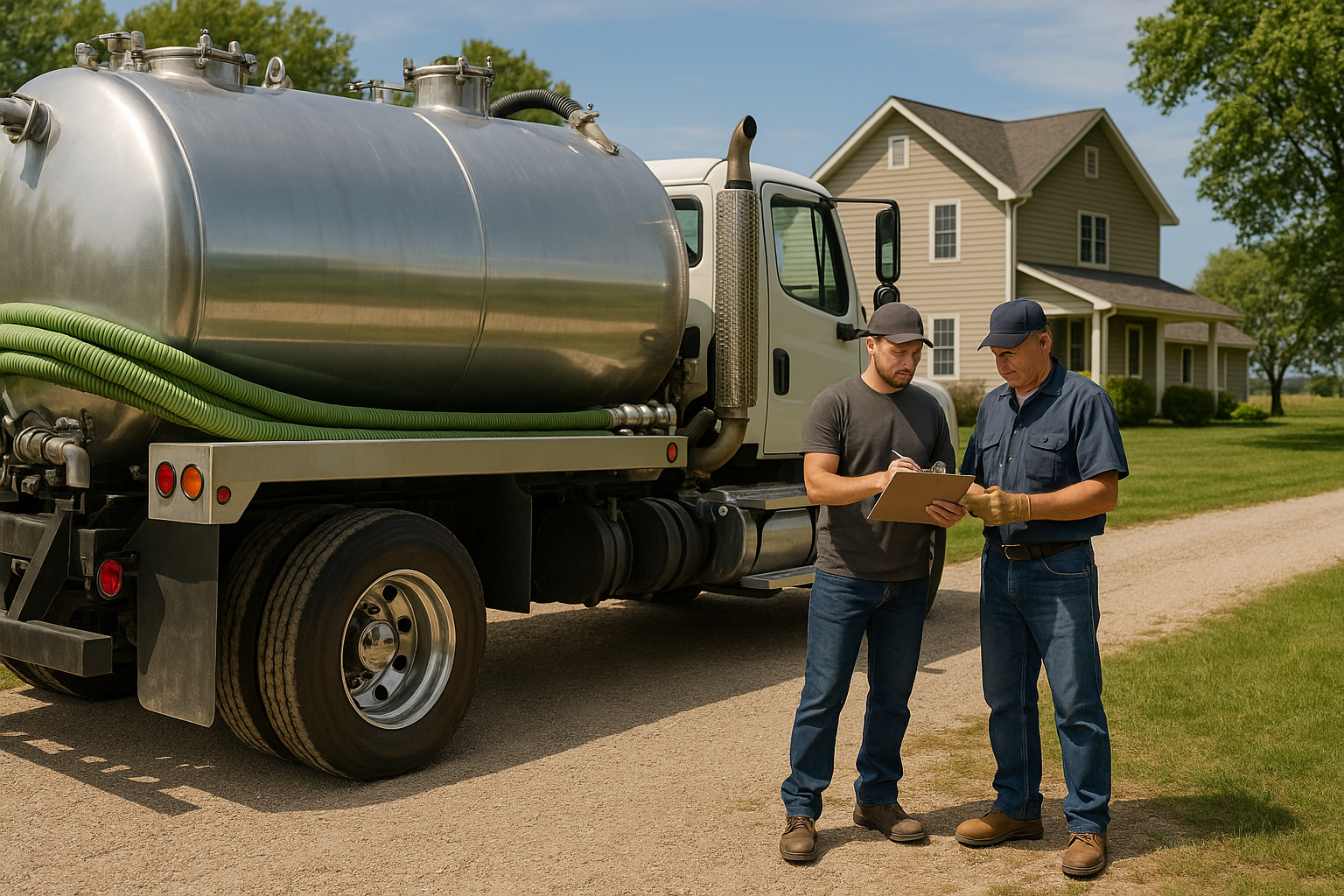
If you built a septic service company in Northern Illinois, you built something tougher than most people understand. Early calls. Bad weather. Tight driveways. Heavy trucks. Pumps that never break down at a convenient time. Customers who wait too long, then need you yesterday. And through all of that, you kept homes, farms, parks, contractors, and events running the way they're supposed to run.
That's a real business. Not a hobby. Not a route you picked up by accident. A buyer can see value in that, especially in McHenry County, Kane County, DeKalb County, Kendall County, Lake County, and the outer Chicagoland suburbs where septic work isn't going away. But they won't just write a big check because the trucks look good in the yard. They want proof.
And that's where preparation pays you back.
Why buyers like septic companies
Buyers like septic businesses because people need the work done. Homeowners need tanks pumped. Real estate deals often need inspections. Rural and semi-rural properties need regular service. Contractors, farms, parks, and event operators need portable toilets. Some accounts come back every year, some every few years, but the need is always there.
That's the part buyers love. Essential service. Repeat customers. Routes. Equipment. Local name recognition.
But they also look hard at the moving parts. Septic work is equipment-heavy, labor-sensitive, and regulated. If your trucks are tired, your disposal access is shaky, or every customer calls your personal cell phone because nobody else knows what's going on, a buyer will notice. That's not the end of the world. It just needs to be cleaned up and explained before it becomes a price problem.
At Tangent Brokerage, we've seen this over and over: the same business can look average or it can look like a strong acquisition. The difference is usually the records.
Your routes tell the story
Route quality is a BIG deal. Buyers aren't only asking, "How much revenue did you do?" They're asking, "How hard was it to produce that revenue?" Big difference.
A dense route in a few strong towns is worth more than scattered one-off jobs all over creation. A repeat residential base is easier to understand than random emergency calls with no history. Organized scheduling beats a pile of paper slips in the truck. Every time.
Pull together the route and customer data buyers will ask for:
- Customer history: Service dates, job type, property address, gallons pumped, price charged, and notes.
- Three years of data: If you've got it, use it.
- Recurring cycles: Who's on a predictable pumping schedule?
- Reminder system: Mailers, texts, software, spreadsheets, whatever you use.
- Revenue by category: Septic pumping, inspections, repairs, emergency calls, portable toilet rentals, grease trap service if applicable, and other add-on work.
- Service territory: Towns, counties, and route clusters.
- Lead sources: Repeat customers, referrals, real estate agents, plumbers, builders, municipalities, online search, or paid ads.
Do buyers need perfect software? No. Don't let that stop you. But they do need enough information to believe the story. Paper files, truck notebooks, and three different spreadsheets can work, but get them pulled into one clean package before you go to market.
Pro tip: If a buyer can see route density on a map, the business feels more real. Not just revenue on a spreadsheet, actual work in actual towns.
Disposal access matters
Septic has one issue a lot of service businesses don't have: where does the waste go?
A buyer will want to know where septage is taken, what it costs, and whether access is dependable. Treatment plant. Farm application site. Third-party disposal provider. Whatever the setup is, document it. If it's based on a handshake, that's not a deal killer, but it's something to tighten up if you can.
Gather the paperwork:
- Permits
- County registrations
- Illinois environmental compliance records
- Disposal manifests
- Inspection reports
- Notices or corrective actions, if any
If you've had a violation, don't bury it. Bad idea. Explain what happened, show how it was fixed, and show what process keeps it from happening again. Buyers can handle a past issue. What they don't like is a surprise in diligence.
Clean compliance records make buyers comfortable, and comfortable buyers make better offers. Simple as that.
Trucks, tanks, and equipment
Your fleet is not background noise. It's central to the deal.
Buyers will look at vacuum trucks, service vehicles, trailers, portable toilet units, tanks, hoses, pumps, shop tools, and any inspection or locating equipment. Then they're going to ask themselves, "How much money do I need to spend after closing?"
So make the answer easy.
- List every major asset: Year, make, model, VIN or serial number.
- Show mileage or hours: Don't make buyers guess.
- Include capacity: Especially on trucks and tanks.
- Note ownership status: Owned, leased, financed.
- Compile maintenance records: Oil changes, pump rebuilds, tank repairs, hose replacement, brake work, DOT inspections, major repairs.
- Flag debt: What needs payoff? What needs lender approval?
- Separate inventory: Portable toilet inventory, chemicals, parts, and receivables.
Missing titles, expired registrations, undocumented truck repairs, those things don't usually kill a deal. But they slow it down and give a buyer a reason to push back on price. Get ahead of it.
Can the business run without you?
This is the question buyers always get to.
You've probably been the fixer, scheduler, estimator, mechanic, customer service department, and complaint desk at different points. That's how these companies get built. I respect it. Buyers do too.
But when you're selling, they need to know what transfers after you leave.
Document your people:
- Drivers
- Technicians
- Dispatch or scheduling help
- Inspection experience
- Repair estimating ability
- Pay structure
- Tenure
- Certifications
- Who can train the next person
If you're still the only one managing disposal relationships, approving every schedule, or estimating every repair, start moving some of that knowledge to the team. Not overnight. Just start. A business with systems sells better than a business powered by one exhausted owner with a cell phone.
And yes, buyers may want you to stay for a transition. That's normal. We can structure that. A few weeks, a few months, sometimes longer depending on the deal.
Show the money clearly
For valuation, buyers usually start with adjusted earnings. Then they test the quality of those earnings. That means they'll look at profit and loss statements, tax returns, bank statements, payroll reports, equipment debt schedules, and anything that explains the real cash flow.
They'll also look for personal expenses, one-time repairs, family payroll, unusual fuel costs, insurance claims, and revenue that may not continue. None of that is unusual. Most privately held businesses have a few add-backs and a few things to explain (that's normal). The key is to organize it before buyers ask.
Septic companies with dense routes, repeat customers, documented disposal access, modern equipment, and a trained crew usually draw stronger interest. If you've got aging trucks, messy books, customer concentration, or heavy owner dependence, you can still sell. Absolutely. You just need the right story, the right buyer, and sometimes a little flexibility on transition or seller financing.
Before you go to market
Don't blast sensitive information all over the place. That's not how you sell a good septic company.
Build a confidential package that explains the company without giving away customer names too early. Use a non-disclosure agreement before sharing detailed route data, employee information, financial records, or disposal relationships. Decide ahead of time how employees, key customers, and disposal partners will be handled if the sale moves forward.
This is where Tangent Brokerage helps keep the process tight. You keep running the company, we help package it, screen buyers, protect confidentiality, and keep the deal moving.
FAQs
How long does it take to sell a septic service company?
Most solid service businesses take several months to sell, sometimes longer if there are multiple trucks, employees, disposal contracts, or real estate involved. The cleaner your records are, the faster buyers can move.
Do I need formal disposal agreements before selling?
Not always, but documented disposal access helps a lot. If it's a handshake relationship, write down the history, pricing, facility details, and any permits or manifests that support it.
Will buyers care about portable toilet rentals?
Yes. Portable toilet rentals can add recurring revenue and route density, but buyers will want unit counts, condition, pricing, cleaning schedules, and customer types.
Can I sell if I'm still heavily involved every day?
Yes, but expect buyers to ask for a transition plan. Start documenting how scheduling, inspections, repairs, disposal, and customer calls are handled so the business feels transferable.
What records should I clean up first?
Start with financials, route history, fleet records, disposal paperwork, and employee roles. Those five areas answer most of the first buyer questions.
You've got a strong exit to plan
You built a business that does necessary work in a market that still needs it. That's a great place to start. With the right preparation, selling a Northern Illinois septic service company can be a clean, well-run process that protects what you built and sets you up for whatever comes next.
If you're thinking about selling, contact Tangent Brokerage at 630-862-5234 or request a free valuation. Let's talk through your routes, fleet, disposal access, compliance records, and what your company may be worth.